


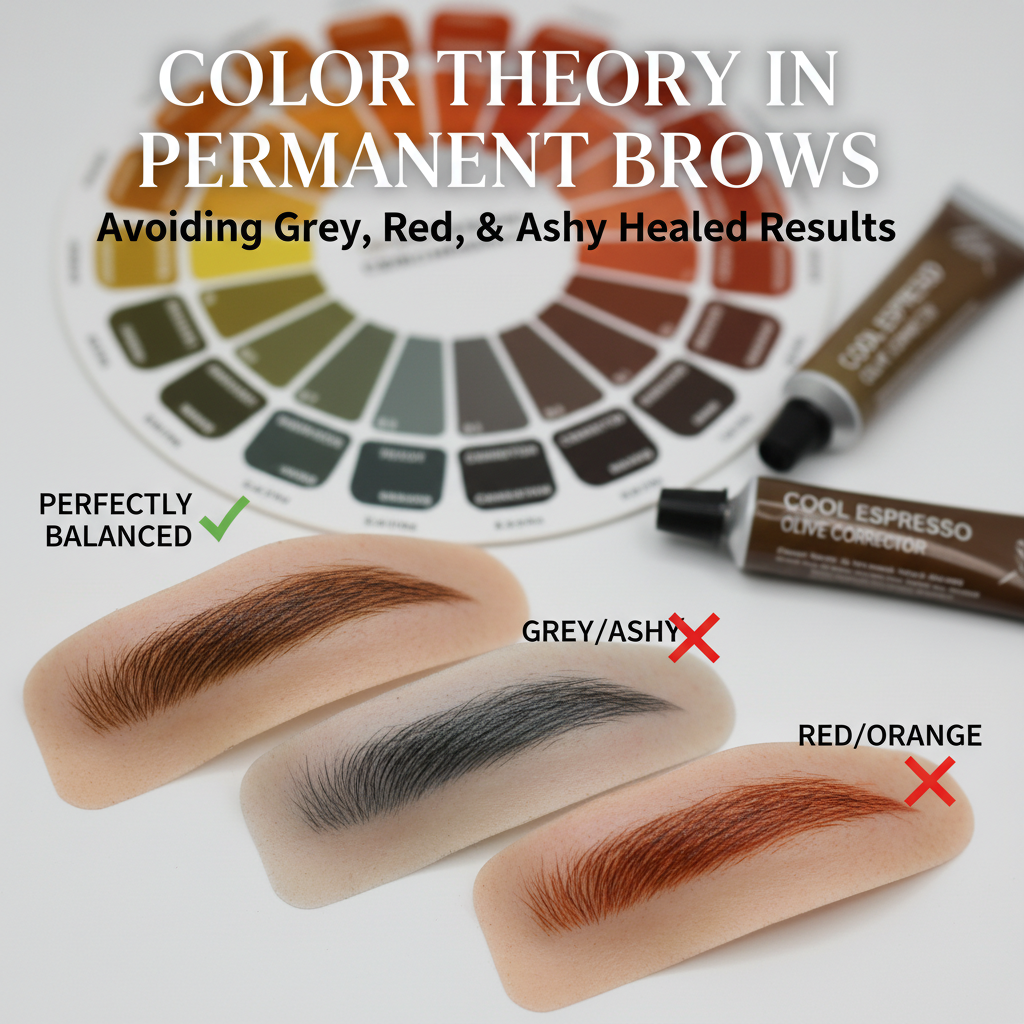
Color Theory in Permanent Brows: Master How to Avoid Grey, Red, and Ashy Healed Results
You’ve envisioned perfectly shaped, beautifully colored permanent eyebrows – a true game-changer for your daily routine. But what happens when those dreams turn into a frustrating reality of brows that heal grey, reddish, or an unappealing ashy tone? This common concern plagues many in the world of permanent makeup, but the good news is, it’s entirely preventable with a deep understanding of **Color Theory in Permanent Brows**.
For both aspiring artists and discerning clients, knowing the science behind pigment selection and skin interaction is the ultimate secret to achieving stunning, long-lasting results. Say goodbye to undesirable healed colors and hello to brows that truly enhance your features!
The Problem: When Brows Go Wrong
Permanent makeup pigments are designed to enhance your natural beauty, but several factors can cause them to shift in color over time. Unlike traditional tattoos, cosmetic tattoo pigments are formulated to fade gracefully and are deposited more superficially. This delicate balance, combined with external factors, can sometimes lead to:
* **Grey or Blue Brows:** Often occurs when a pigment is too cool for the client’s skin undertone, or if too much black/blue is present in the pigment mixture.
* **Red or Orange Brows:** Typically happens when the warmer components of a pigment (like reds and yellows in iron oxides) break down or fade faster than cooler components, or if the initial pigment was too warm for the skin.
* **Ashy Brows:** Similar to grey, but can also describe a dull, flat, or lifeless tone that lacks warmth or vibrancy. This can stem from overly cool pigments or improper depth.
The key to avoiding these outcomes lies squarely in understanding and applying professional color theory.
Understanding the Basics of Color Theory for PMU
Color theory is an artist’s roadmap to creating harmonious and balanced colors. In permanent makeup (PMU), it’s even more critical because you’re applying pigment to a living canvas – skin – which has its own unique color and undertone.
At its core, color theory helps artists:
1. **Identify underlying skin tones:** Knowing if a client’s skin is warm, cool, or neutral is paramount.
2. **Select appropriate pigments:** Choosing the right base pigment and understanding its components.
3. **Utilize modifiers:** Adding specific colors to balance or correct a pigment.
The Fitzpatrick Scale & Skin Undertones
A crucial tool for PMU artists is the Fitzpatrick Scale, which classifies skin types based on their reaction to sun exposure. However, even more important is assessing **skin undertone** – the subtle color beneath the surface of the skin.
* **Warm Undertones:** Skin tends to have golden, peach, or yellow hues. Veins often appear greenish.
* **Cool Undertones:** Skin tends to have pink, red, or blue hues. Veins often appear purplish-blue.
* **Neutral Undertones:** A mix of both warm and cool, or neither is dominant. Veins can appear both green and blue.
Correctly identifying the undertone is the first step in preventing color catastrophes.
Key Strategies to Avoid Undesirable Healed Results
Professional PMU artists meticulously plan each treatment, leveraging color theory to achieve flawless results. Here’s how they master avoiding common pitfalls:
1. Banishing the Blue-Grey Blues
Grey or bluish brows are a classic sign of a pigment cooling down too much in the skin.
* **Why it happens:** Often, the pigment chosen was too cool for the client’s skin undertone, or the artist didn’t account for the skin’s natural cool predisposition. Overly deep implantation can also contribute, as more light absorption can make colors appear cooler.
* **How to avoid it:**
* **Warmth is Key:** For clients with cool undertones, select pigments with a balanced warm base or add a touch of warm modifier (like orange or yellow) to the chosen pigment.
* **Analyze Skin Thoroughly:** Don’t just look at surface color; assess the undertone using various methods (wrist veins, jewelry test).
* **Avoid Excessive Black:** Black pigment is very cool and should be used sparingly, if at all, in brow formulations for most clients.
2. Escaping the Red/Orange Redemption
Red or orange brows typically result from the selective fading of pigment components or an initial misjudgment of warmth.
* **Why it happens:** Many brow pigments contain iron oxides. Over time, the cooler, darker components (like black) can fade faster than the warmer components (red and yellow oxides), leaving behind a reddish-orange hue. It can also happen if a pigment that was too warm was chosen for a client with a naturally warm skin undertone.
* **How to avoid it:**
* **Balanced Pigment Selection:** Choose high-quality pigments from reputable brands that are formulated to fade neutrally.
* **Cool Modifiers:** For clients prone to red healing, or those with very warm skin, a touch of olive or green modifier can neutralize excess warmth.
* **Understand Pigment Ingredients:** A skilled artist knows the composition of their pigments and how each component will likely age in the skin.
3. Preventing Ashy, Lifeless Brows
Ashy brows often appear dull, flat, and lack vibrancy, sometimes with a greyish undertone.
* **Why it happens:** This can be a result of using pigments that are too cool or contain too much blue/grey without adequate warmth to balance the skin’s natural tones. It can also occur if the pigment is implanted too superficially, resulting in poor saturation and a ‘dusty’ look.
* **How to avoid it:**
* **Introduce Warmth:** Ensure there’s enough warmth in your chosen pigment to keep the brows from looking flat or lifeless. Even for cool clients, a perfectly neutral brow will have a hint of warmth to prevent ashiness.
* **Optimal Depth:** Proper pigment implantation depth is crucial for true color retention and vibrancy. Too shallow, and the color won’t hold; too deep, and it can cool down or blur.
* **Consider the Entire Palette:** Think about how the pigment will interact with the client’s hair color and natural brow hairs.
The Pillars of Perfect Permanent Brows
Achieving truly beautiful and lasting permanent brows goes beyond just choosing a color. It encompasses a holistic approach built on expertise:
* **In-depth Client Consultation:** A thorough discussion about expectations, lifestyle, and medical history, combined with a precise skin tone and undertone analysis.
* **Superior Pigment Knowledge & Selection:** An artist’s understanding of pigment brands, ingredients, and how different colors interact with various skin types.
* **Precision Application Technique:** Skillful hands that ensure correct depth, saturation, and even distribution of pigment.
* **Meticulous Aftercare Guidance:** Providing clear instructions for healing to ensure optimal color retention and prevent complications.
Don’t Settle for Less: Choose an Expert
Your eyebrows frame your face and significantly impact your overall appearance. Entrusting them to an artist who deeply understands **Color Theory in Permanent Brows** is not just an option, it’s a necessity for achieving the beautiful, natural, and long-lasting results you deserve.
Ready to transform your brows with confidence? Seek out a certified and experienced permanent makeup artist who prioritizes color theory and client education. They are your best defense against unwanted grey, red, or ashy healed results.
Contact us today to schedule your consultation and discover how expert color theory can give you the perfect permanent brows!